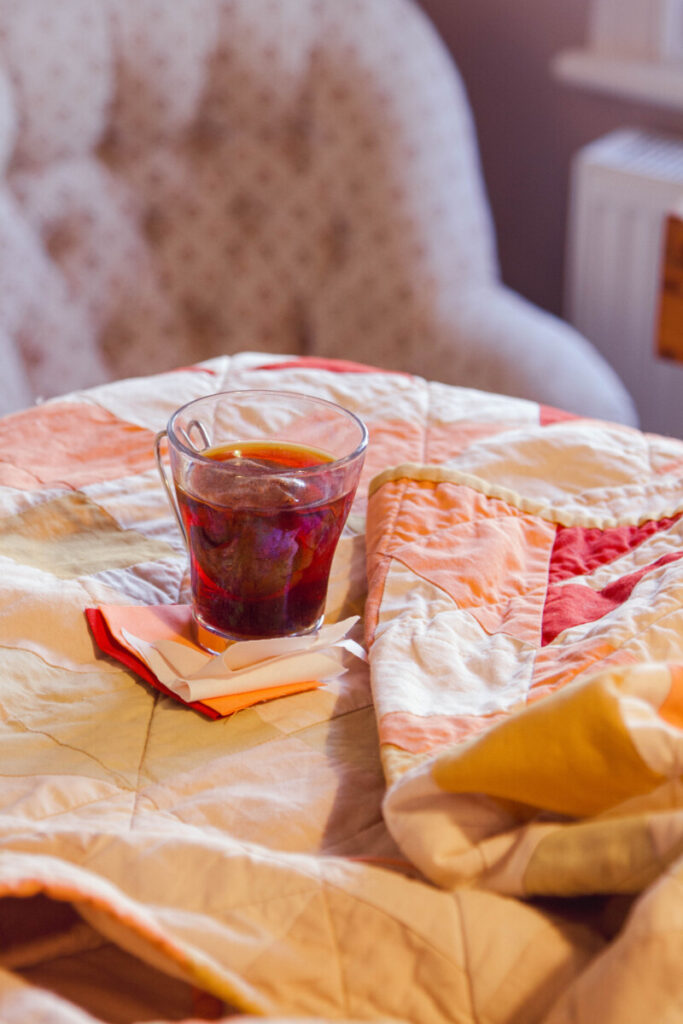
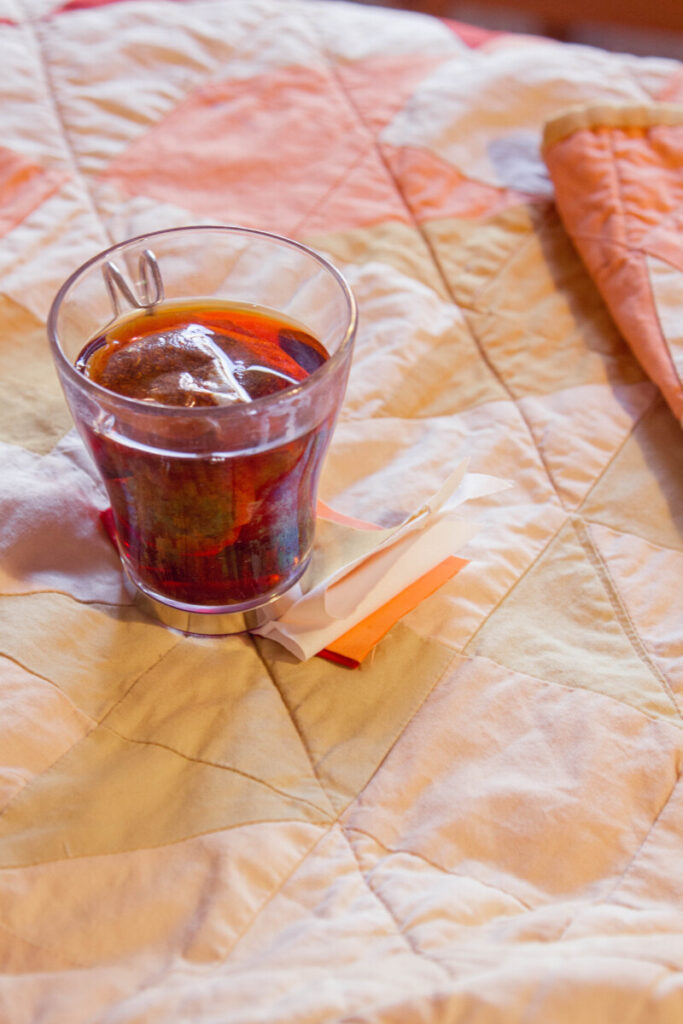
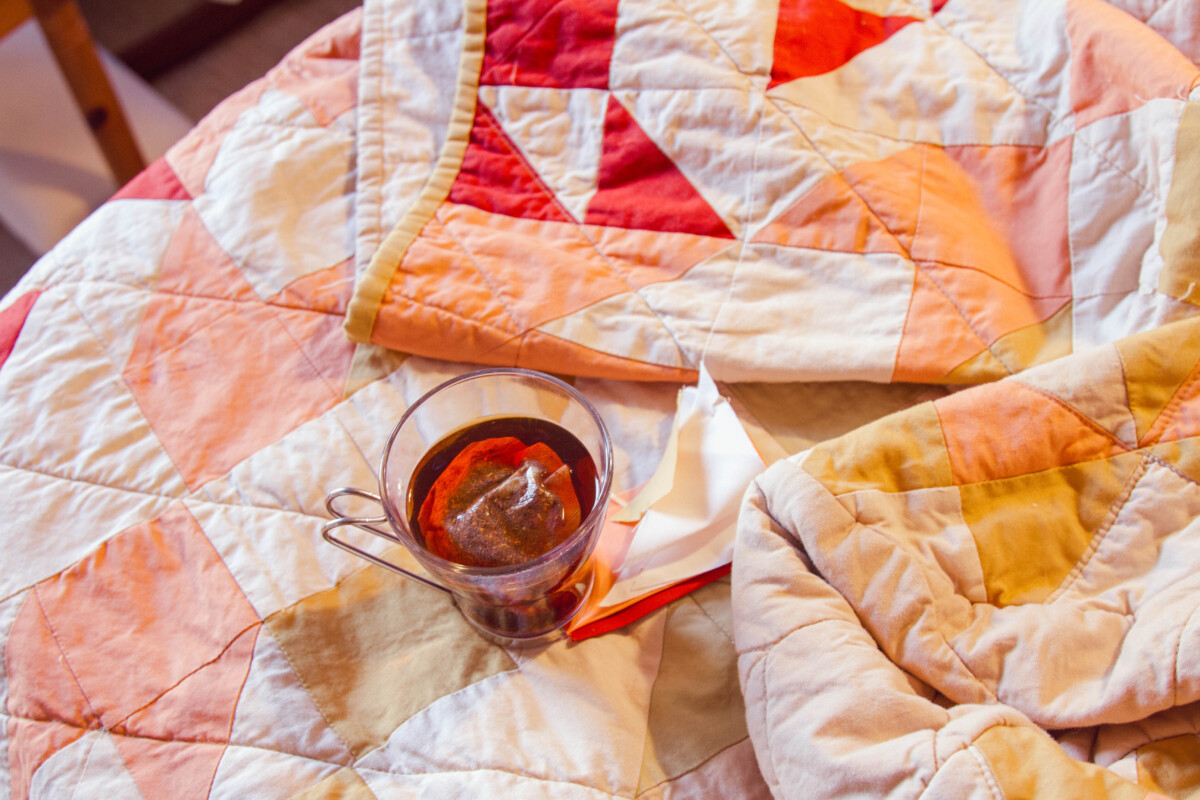
There’s something about a slightly faded, time-worn quilt that feels comforting and nostalgic, like it has stories to tell. When I finished my Stargazer Wearable Quilt, I loved the design but wanted to soften the bright fabrics and give it a more vintage, well-loved look.
So I decided to try something wonderfully simple: tea staining.
If you’ve never dyed fabric with tea before, it’s an incredibly easy way to add warmth and depth to quilts and textiles using ingredients you probably already have in your kitchen. The result is a subtle, natural tint that takes the edge off crisp new fabrics and makes them look gently aged.
Here’s exactly how I stained mine.
Why Tea Stain a Quilt?
Tea staining works particularly well for quilts because it:
Softens bright or stark fabrics
Adds a warm, antique tone
Gives the quilt a slightly aged, vintage feel
Is very forgiving and easy to do at home
For my quilt, I used a mixture of English tea, rooibos tea, and a touch of coffee to create a warm, slightly earthy tone rather than a yellowy one.
What You’ll Need
20 English tea bags
7 Rooibos tea bags
1 teaspoon instant coffee
A large pot
A large tub (I used a baby bath / laundry tub)
5 tablespoons salt
A stick or spoon for stirring
Step 1: Wash the Quilt First
Start by washing your quilt on a regular washing cycle at 40°C. Don’t dry it, you want the quilt to go into the tea bath still wet, as damp fabric absorbs dye more evenly.
Step 2: Make the Tea Dye Bath
In a large pot, steep:
20 English tea bags
7 Rooibos tea bags
1 teaspoon instant coffee
Let this steep for about 20 minutes to create a strong tea concentrate.
I used the coffee simply to deepen the colour slightly and prevent the tone from becoming too yellow.
Step 3: Dilute the Tea
Fill your tub with enough hot water to fully cover the quilt.
Pour the tea mixture into the tub and stir well. At this stage, you can test the colour — if it looks too strong, simply add more water.
Remember: the quilt will dye lighter than the bath looks.
Step 4: Submerge the Quilt
Place your wet quilt directly into the tea bath, making sure it is fully submerged.
Because the water can be quite hot, I used a stick to help push the quilt under the surface.
Leave it soaking for about 90 minutes, occasionally agitating the quilt and ensuring no areas are sticking out of the water. This helps create a more even tone.
Step 5: Set the Colour with a Salt Bath
Prepare a second tub filled with cold water and about 5 tablespoons of salt.
Lift the quilt straight from the tea bath and place it directly into the cold salt bath.
Leave it here for around 10 minutes. The salt helps set the colour.
Step 6: Rinse and Dry
Rinse the quilt thoroughly until the water runs clear.
Then:
Run it through a spin cycle
Dry naturally away from direct sunlight or place it in the dryer
Once dry, the quilt will have a beautifully softened tone and a gentle vintage character.
The Result
I absolutely love how this turned out. The staining softened the fabrics just enough to give the quilt a worn-in, heritage feel, without overpowering the design.
It now feels like the kind of quilt that’s already been on many adventures — even though it’s brand new.
And the best part? I’m planning to take it camping, which feels very fitting for something called the Stargazer quilt.
Make Your Own Stargazer Wearable Quilt
If you’d like to make your own, the Stargazer Wearable Quilt pattern is available in my shop.
It’s a convertible quilt that can also be worn as a poncho, making it perfect for:
camping
evenings by the fire
stargazing
or simply wrapping up at home
And if you decide to tea stain yours too, I’d absolutely love to see how it turns out.
If you’d like to see the entire sewing process and the tea staining step in action, you can watch the full sew-along video below.
Why Tea Staining Works (A Little Bit of Simple Science)
Tea staining works because tea contains tannins.
Tannins are natural plant compounds that have been used for centuries to dye fabrics, tan leather, and even make ink. When fabric, especially natural fibres like cotton, is soaked in tea, these tannins bind to the fibres and leave behind a soft brown tint.
Here’s what each step in the process does:
Hot tea bath Heat helps open the fibres of the fabric, allowing the tannins from the tea (and the slight pigment from the coffee) to penetrate more easily.
Keeping the quilt wet Starting with a freshly washed wet quilt helps the dye absorb more evenly and prevents patchy areas.
Salt bath Salt helps the colour cling to the fibres by encouraging the dye molecules to stay attached to the fabric rather than washing away.
Cold water The cold bath helps the fibres contract again, helping to lock the colour in place.
The result is a soft, natural-looking tint that gives new fabric a gentle, vintage feel.